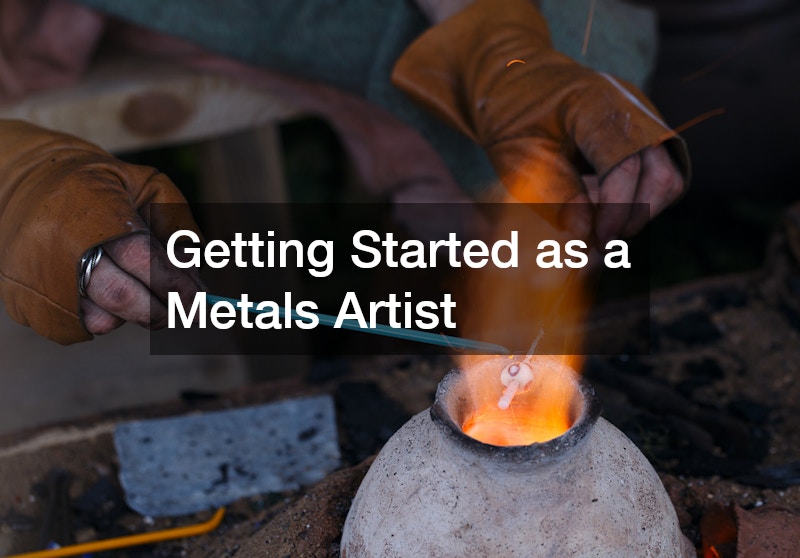
Getting Started as a Metals Artist
The allure of metal is ancient, primal, and incredibly enduring. In a world increasingly dominated by the ephemeral nature of digital assets and plastic disposability, the act of shaping cold, hard steel or shimmering gold into a permanent form offers a profound sense of accomplishment. To be a metals artist in 2026 is to be a bridge between the industrial past and a high-tech future. It is a discipline that requires the patience of a monk, the precision of a surgeon, and the physical grit of a blacksmith. Whether your goal is to build towering sculptures for public parks or to create intricate, wearable pieces of art, the journey begins with understanding the unique language of the forge and the bench.
Starting this journey can be intimidating. The equipment is heavy, the materials can be expensive, and the stakes involve high heat and high-speed machinery. However, the barrier to entry is lower than it has ever been, thanks to a global community of makers and a wealth of accessible technology. This guide is a 4,800-word deep dive designed to take you from a curious observer to a confident practitioner. We will explore the logistics of setting up a studio, the mastery of fundamental techniques, the ethics of sustainable sourcing, and the strategic side of turning your passion into a professional career.
Setting Up Your First Metals Studio
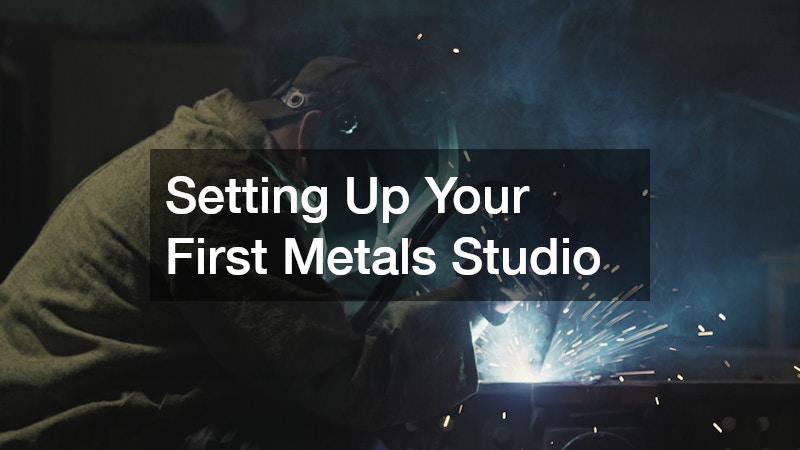
The first hurdle for any aspiring metals artist is the workspace. Unlike a painter who can work at a kitchen table, a metalsmith requires a dedicated environment where fire, noise, and dust can be safely managed. Your studio should be divided into distinct zones based on the “cleanliness” of the work. The “Hot Zone” is where you will do your soldering, brazing, or welding; it must have a fire-resistant floor—ideally concrete—and a professional-grade ventilation system. The “Dirty Zone” is for grinding and sanding, while the “Clean Zone” is reserved for high-precision tasks like stone setting or final polishing.
When it comes to equipment, your foundation must be rooted in structural stability. If you plan on doing large-scale work, you need to understand the basics of metal fabrication, which involves the cutting, bending, and assembling of metal structures to create a cohesive whole. This might mean investing in a heavy-duty chop saw, a drill press, and a variety of clamps. Equally important is your relationship with your material. Finding a reliable metal supply is critical; you need a partner who can provide everything from mild steel sheets to specialized alloys, and who can offer advice on the “temper” and “gauge” of materials best suited for your specific artistic goals.
The Essential Studio Audit
Ventilation:
Do not settle for a window fan. Invest in a dedicated fume extractor to protect your lungs from metal dust and flux fumes.
Fire Safety:
Keep multiple fire extinguishers on hand—one for electrical fires and one for chemical/metal fires—and ensure your workspace is free of clutter.
Lighting:
Use a mix of overhead LED shop lights and adjustable bench lamps to eliminate shadows during detail work.
The Workbench:
A jeweler’s bench should be high enough that you aren’t slouching, with a “catch-tray” underneath to salvage precious metal dust.
Compressed Air:
A small air compressor is invaluable for blowing out debris from tight crevices and drying pieces after a chemical bath.
Mastering the Fundamentals of Metal Manipulation
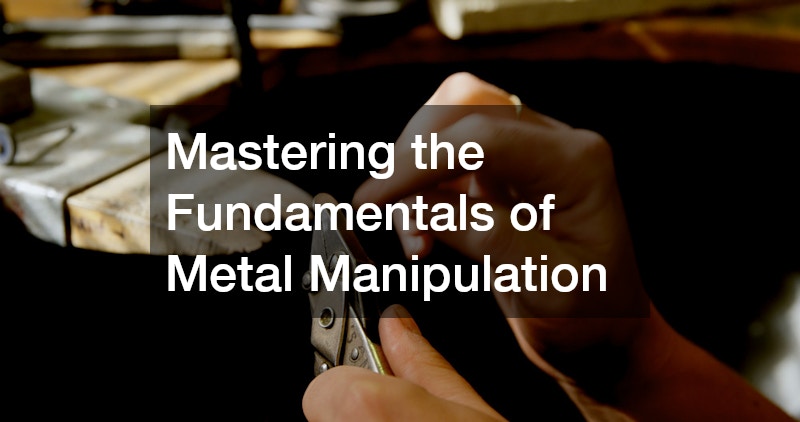
Once your space is set, the focus shifts to skill acquisition. Metal is a stubborn medium; it does not want to change its shape. To master it, you must learn how to use heat and force to your advantage. For beginners, the most effective way to gain confidence with heavy machinery and high-heat joining is to enroll in a local welding class. Learning how to manage an electric arc or a gas torch under the guidance of a professional will save you months of frustration and potentially dangerous mistakes. These classes provide the “industrial backbone” that allows you to scale your art from small trinkets to architectural-scale pieces.
As you progress, you will find that metal art is rarely about a single material. The most compelling modern works often incorporate a variety of media to create contrast and depth. You might find yourself embedding hand-blown glass into a copper frame or using 3D-printed resins to create complex geometries that would be impossible to forge by hand. Understanding how metal interacts with different materials—how it expands and contracts at different rates than wood or stone—is what separates a hobbyist from a professional artist.
Beyond the physical manipulation of the material, a modern metalsmith must also become a student of metallurgy to predict how different alloys will react under the torch. Navigating the chemical properties of your media allows you to push the boundaries of traditional forms, such as creating bi-metal laminates or experimenting with heat-induced oxidation to achieve specific iridescent hues. This technical knowledge ensures that when you combine metal with organic elements or synthetic polymers, the structural integrity of the piece remains uncompromised over decades of display or wear.
Foundational Techniques to Practice
Annealing:
Learning the precise temperature at which to heat a metal to make it “soft” and workable again after it has been work-hardened.
Filing and Sawing:
Mastering the jeweler’s saw and the hand file is the most tedious but essential part of the craft; it is where the “soul” of the piece is refined.
Cold Connections:
Practicing rivets, tabs, and “tension sets” so you can join materials that cannot withstand the heat of a torch.
Patination:
Using chemicals or heat to create intentional “aging” or coloring on the surface of the metal.
Hammer Control:
Learning the difference between a “planishing” hammer for smoothing and a “ball-peen” hammer for texturing.
The Art of Fine Jewelry and Wearable Metals
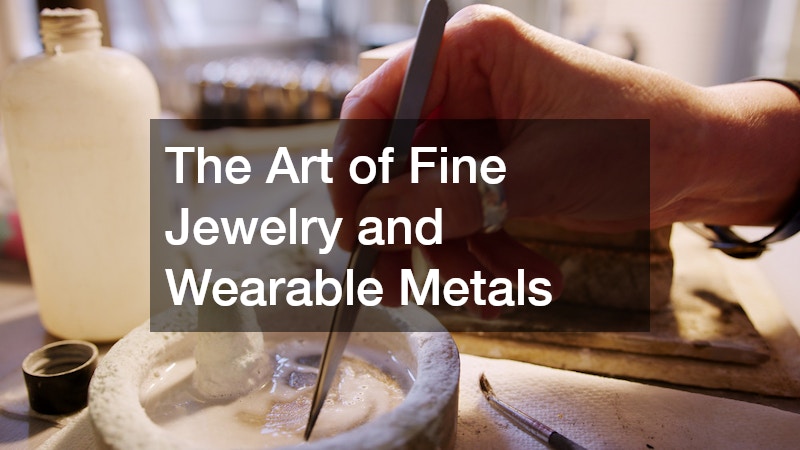
While large-scale sculpture is about strength and presence, jewelry is about intimacy and precision. Transitioning from the anvil to the jeweler’s bench requires a shift in scale and a much higher tolerance for detail. In this realm, you are no longer just an artist; you are a designer who must consider the ergonomics of the human body. Your custom jewelry designs should not only be visually striking but also comfortable for long-term wear. This involves understanding the “physics of the ear” for earrings and the “articulation of the finger” for rings.
Sourcing materials for jewelry is a specialized endeavor. Because the costs of gold and silver are volatile, many artists find that they need to supplement their inventory through creative means. This might involve working with a gold jewelry buyer to exchange scrap or unwanted pieces for high-quality grain or sheet metal. By maintaining a lean inventory of precious metals, you can keep your overhead low while still producing high-end work that commands a premium price in the “fine art” market.
Designing for Wearability
Weight Distribution:
A beautiful earring is useless if it is too heavy for the earlobe; learn how to use “hollow-forming” techniques to maintain volume without weight.
Safety of Settings:
Ensure that prongs and bezels are smooth and snag-free; a piece of jewelry that ruins a client’s silk dress is a professional failure.
Metal Purity:
Always hallmark your work (e.g., .925 for silver, 14K for gold) to build trust with your buyers and ensure the longevity of the piece’s value.
Skin Sensitivity:
Understand which alloys contain nickel, a common allergen, and opt for hypoallergenic metals like titanium or high-karat gold when possible.
Ergonomic Testing:
Wear your prototypes for a full day before finalizing a design to identify any sharp edges or balance issues.
Sustainable Sourcing and the Circular Economy

In 2026, the “starving artist” trope has been replaced by the “resourceful artist.” Sustainability is no longer an option; it is a core value of the modern consumer. For a metalsmith, this means looking for materials in places others overlook. A local thrift store can be a goldmine for an artist; vintage brass lamps, silver-plated platters, and even old industrial hardware can be melted down or “upcycled” into something entirely new. These “found objects” often have a patina and a history that new, commercially sourced metal simply cannot replicate.
Sometimes, the best way to fund your next big project is to look at the “hidden wealth” in your own studio or home. If you have inherited broken chains or mismatched earrings that are beyond repair, selling them to a cash for gold service can provide the quick capital needed to buy a new kiln or a high-end rolling mill. This “circular” approach to material management ensures that nothing goes to waste and that your artistic practice remains financially viable even as raw material costs fluctuate.
The “Urban Mining” Guide
Magnet Testing:
Always keep a strong magnet in your pocket when “picking”; it will immediately tell you if a piece is solid brass or just brass-plated steel.
Dismantling for Parts:
Look for high-quality hinges, screws, and catches on old furniture or electronics that can be reused in your art.
Scrap Yard Diplomacy:
Build a relationship with the manager of your local scrap yard; they might let you “swap” clean scrap for interesting industrial remnants.
Ethical Gemstones:
If you use stones, look for “post-consumer” diamonds or lab-grown alternatives to ensure your supply chain is conflict-free.
Refining Your Own Scrap:
Invest in a small melting furnace so you can turn your own bench sweeps and “mistakes” back into usable ingots.
Professional Finishing and Preservation
The difference between a piece that looks like a “student project” and one that looks like a “professional masterpiece” is the finish. Metal is highly reactive; it wants to tarnish, rust, and dull over time. Mastery of metal refinishing is essential for ensuring your work retains its beauty after it leaves your studio. This might involve mechanical polishing with a series of buffs and compounds, or chemical treatments that “seal” the surface. A professional finish is not just about shine; it is about intentionality, whether that is a high-mirror polish or a deep, architectural matte.
Finally, you must bridge the gap between the studio and the marketplace. If you have produced a collection of jewelry for sales, your presentation must be as high-quality as the work itself. In 2026, this means having a “digital-first” mindset. High-resolution macro photography is the only way to show a customer the quality of your soldering or the depth of a stone’s color. Your online presence should tell the story of the metal—where it came from, how it was shaped, and why it is built to last a lifetime.
Professional Presentation Checklist
Macro Photography:
Use a dedicated macro lens and a light box to eliminate glares and show the “micro-details” of your work.
Packaging:
Your box and bag are an extension of the art; use sustainable, high-touch materials that make the unboxing feel like an event.
Documentation:
Provide a “Care Card” with every purchase, explaining how the customer should clean and store the metal to prevent tarnish.
The “Process” Narrative:
Document your builds on social media; people are more likely to buy a piece of metal if they have seen it glowing red in the forge.
Inventory Management:
Use digital tools to track your “cost of goods sold,” ensuring you are actually making a profit after accounting for your labor and materials.
Becoming a metals artist is an act of defiance against the “disposable” world. It is a commitment to learning a craft that is as demanding as it is rewarding. By balancing the industrial power of fabrication with the delicate artistry of jewelry design, you create objects that possess a weight and a history that can span generations. The path is not easy—it is paved with burnt fingertips, broken saw blades, and hours of tedious sanding—but the result is a tangible legacy.
As you move forward, stay curious. The most successful artists in 2026 are those who never stop being students. Attend the workshops, join the guilds, and never be afraid to melt down a failed project and start over. The metal will always be there, waiting for you to find its true shape. Your studio is more than just a room with tools; it is a laboratory for your imagination, and the work you produce is the only evidence of the “fire” that drives you. Embrace the heat, master the pressure, and forge a career that is as resilient as the materials you work with.